
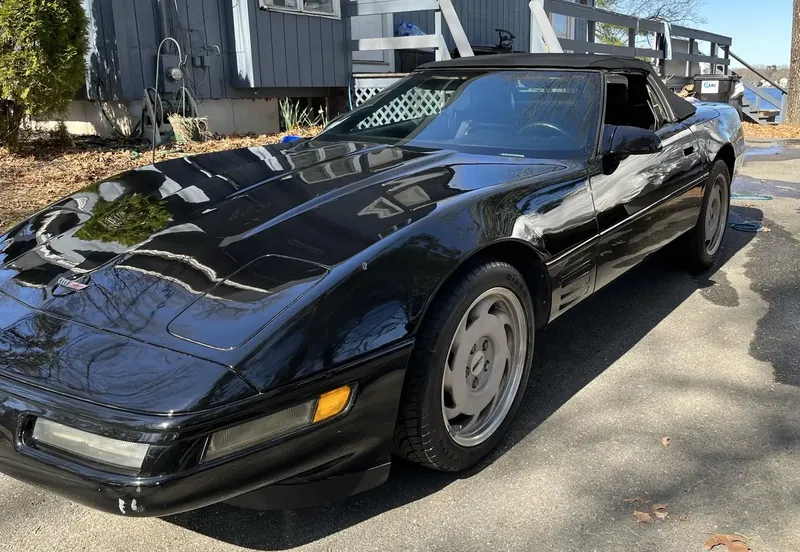
Where swirl marks come from
Swirl marks are thousands of tiny scratches in the top layer of clear coat. They catch light in circular patterns, which is why they look like spider webs around a reflection of the sun. Most come from everyday habits: automatic car washes with brushes, dirty wash mitts, dry wiping dust off the paint, and using the same towel on wheels and paint.
Dark colors show them most, but every color loses clarity and depth when the surface is full of fine marring.
How correction works
Paint correction removes defects instead of filling them. Using machine polishers, specialized pads and abrasive compounds and polishes, a technician levels a microscopic amount of clear coat until the scratches are gone and the surface is flat again. A flat surface reflects light cleanly, which is what makes corrected paint look wet and deep.
Before polishing, the paint is washed and decontaminated so no grit is ground into the finish. A test spot helps choose the gentlest combination that gets the result.
One step vs two step
| Level | What it does | Best for |
|---|---|---|
| One step polish | A single polishing stage that removes light swirls and boosts gloss | Newer vehicles, light defects, coating prep |
| Two step correction | A cutting stage followed by a refining polish, typically removing up to about 70% of visible swirls and scratches | Daily drivers with years of wash marring, dark colors, oxidized paint |
What correction cannot fix
Correction works within the clear coat. If a scratch catches your fingernail, it has likely gone through the clear and into the color or primer. Polishing can soften how it looks, but it will not erase it. The same goes for failing or peeling clear coat and chips that reach bare metal. A good detailer will tell you this before taking your money.
After correction
Corrected paint is the ideal base for protection. A ceramic coating locks in the gloss and makes safe washing easier, and paint protection film stops rock chips on the front end. After that, the biggest factor is how the vehicle is washed: clean mitts, plenty of lubrication, and no brushes.
See our paint correction service or request a quote.
Frequently asked questions
Is paint correction safe for my clear coat?
When done properly, yes. It removes a very small amount of clear coat, so we use the least aggressive method that works.
How long does paint correction last?
The correction itself is permanent. New swirls come from how the vehicle is washed afterward, which is why protecting and washing correctly matters.
Should I correct before selling a car?
Often it is one of the most visible upgrades you can make before a sale, especially on older or darker vehicles.